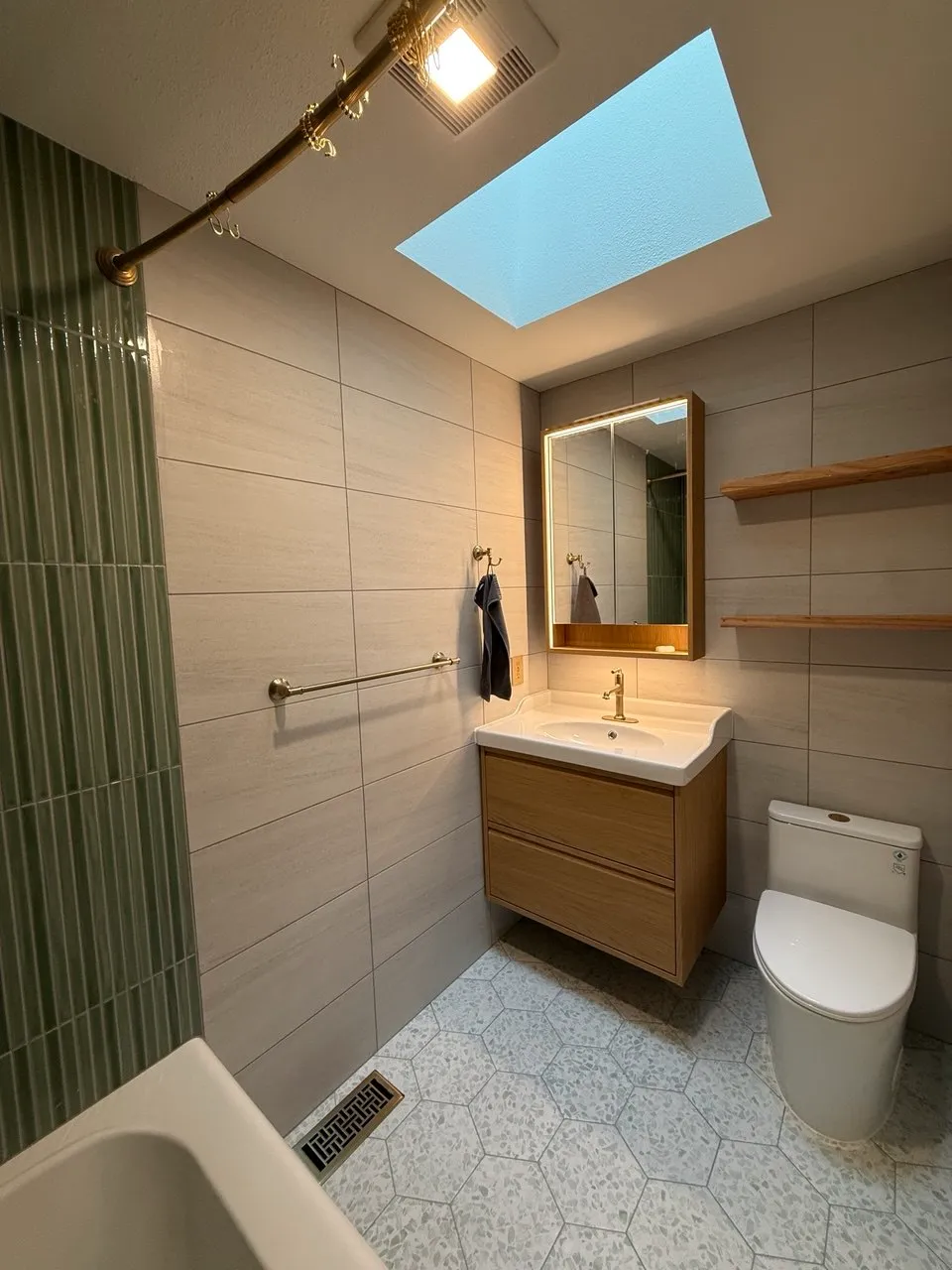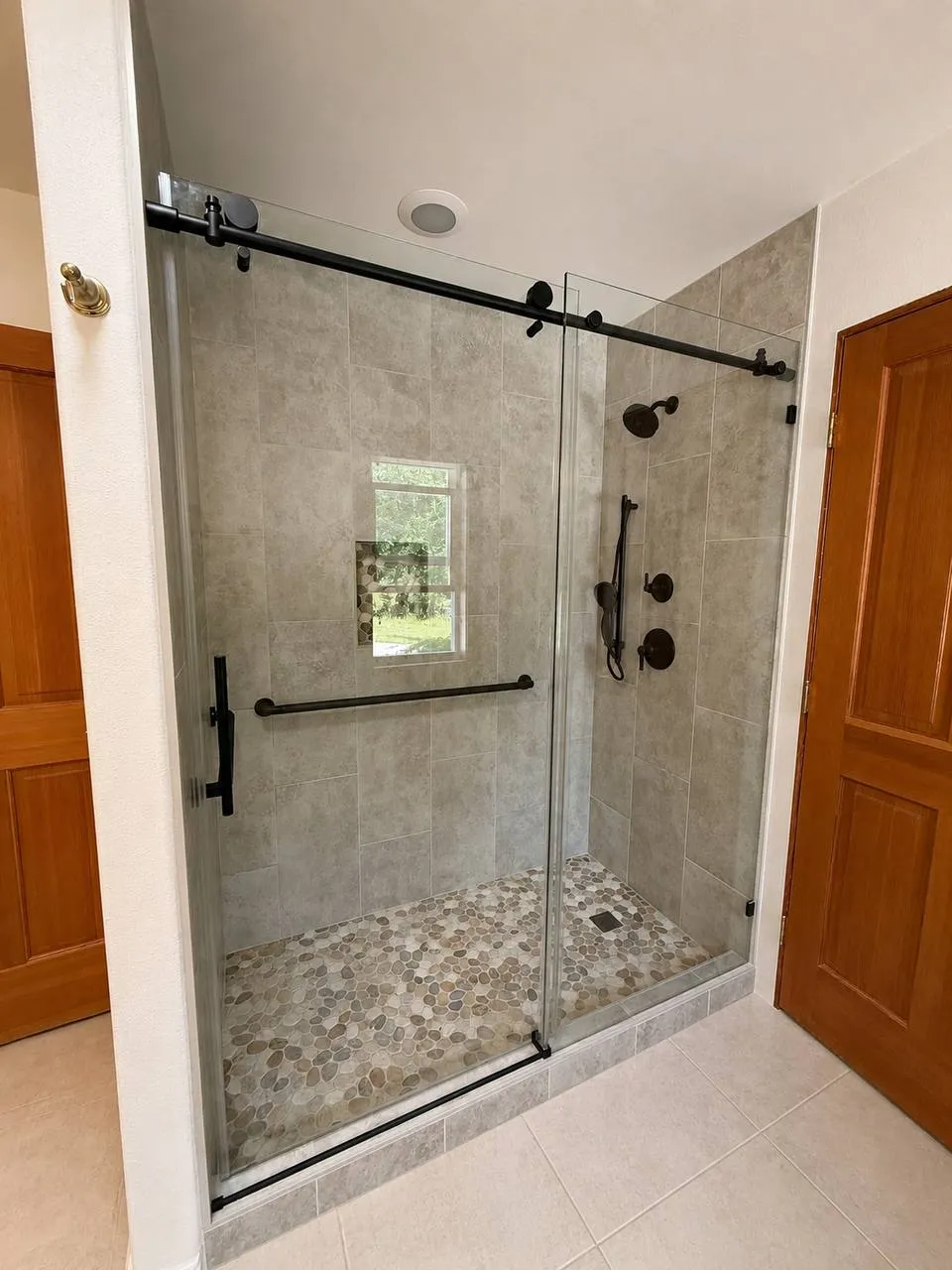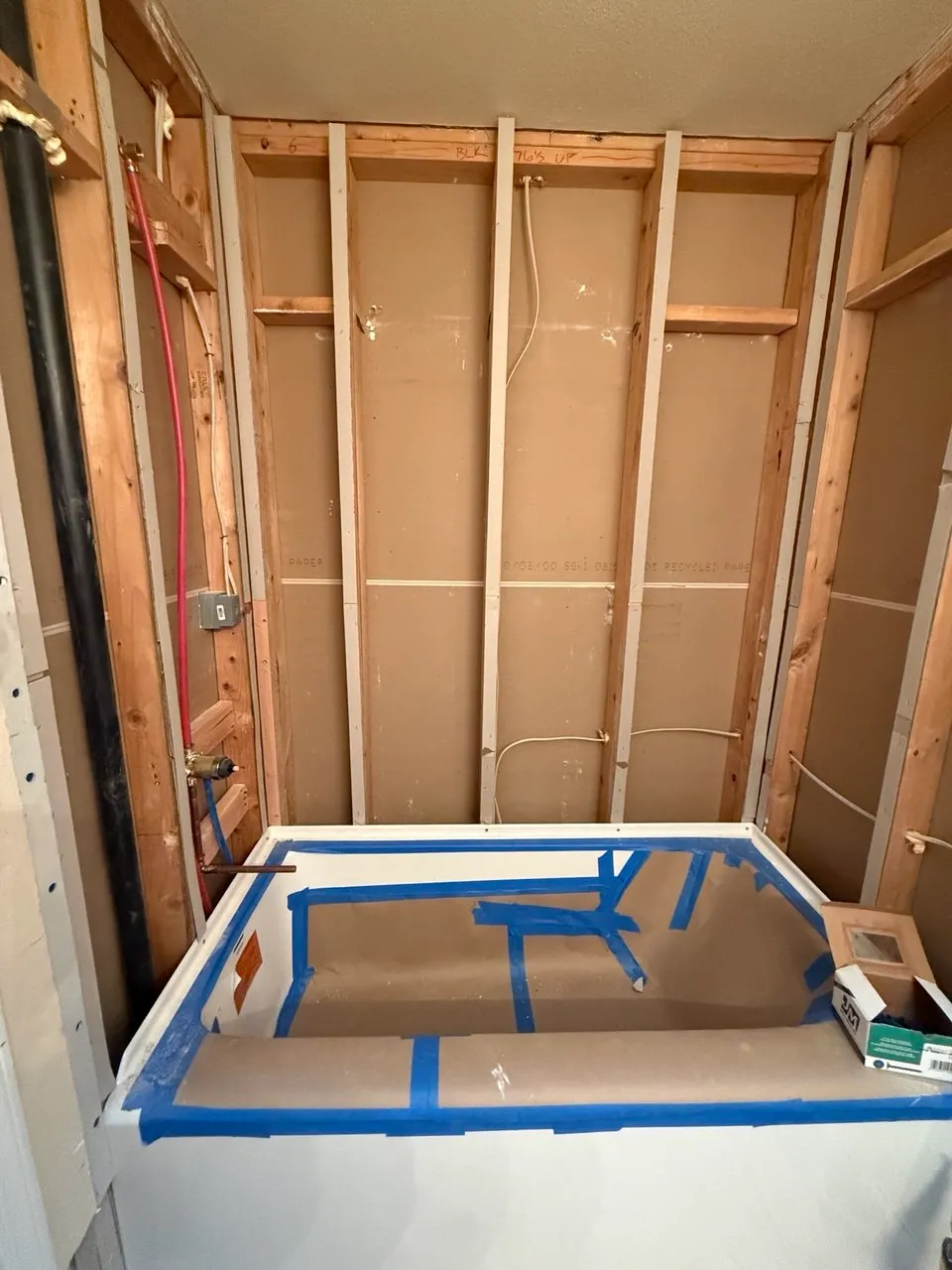
A leaking shower rarely announces itself. Water gets behind the tile slowly, soaks into the wall board and subfloor, and by the time you see a stain or a soft spot, the damage has often been building for months. In the damp Pacific Northwest, where walls dry out slowly, it is one of the most common problems we find when we open up bathrooms in Everett and around Snohomish County.
Here are the warning signs to look for, what causes them, and what you can do about it.
9 Signs Your Shower Is Leaking Behind the Tile
- Loose or hollow-sounding tiles. Tap the tile with a knuckle. A dull, hollow sound or a tile that moves usually means the backing behind it is wet or failing.
- Cracked, crumbling or missing grout. Grout is the first line of defense. Once it cracks, water goes straight behind the tile.
- Caulk that keeps turning black. Mold in the corners that comes back right after cleaning often means moisture is trapped behind it.
- Soft or spongy floor near the shower or tub. This can mean the subfloor is rotting.
- Stains on the ceiling below the bathroom, or on the wall on the other side of the shower.
- Peeling paint or bubbling drywall next to the shower.
- A musty smell that does not go away even when the bathroom is clean and dry.
- Loose baseboards or a gap where the floor meets the tub or shower.
- Your water bill went up without a change in how you use water. This can point to a supply or valve leak inside the wall.
What Causes Leaks Behind Tile
- No real waterproofing. Many older showers in our area were tiled over regular drywall or “green board” with no membrane. Tile and grout are not waterproof on their own.
- A failed shower pan. If the floor under a tiled shower was not built or sloped properly, water collects and seeps out over time.
- Valve and pipe leaks. Old valves, fittings and supply lines inside the wall can drip for a long time before anyone notices.
- Bad seals at the tub or niche. Corners, niches and the joint where tile meets the tub are the most common weak points.
- Poor ventilation. A weak or missing exhaust fan keeps the room damp, so the walls never fully dry.
Simple Checks You Can Do Yourself
- The tap test. Gently tap tiles around the bottom of the walls and near the valve. Note any hollow areas.
- Look below. If there is a room or basement under the bathroom, check the ceiling directly below the shower for stains.
- Check the floor. Press on the floor next to the tub or shower with your foot. It should feel solid.
- Watch the water meter. Turn off all water in the house and see if the meter still moves.
Can Regrouting Fix It?
If the grout is worn but the tile is solid, the floor is firm and there are no stains, regrouting and new caulk can buy you time. If tiles are loose, the floor is soft or you see stains below, the damage is already behind the tile. Surface fixes will not stop it, and covering it up usually makes the repair bigger later.
How We Rebuild a Failing Shower
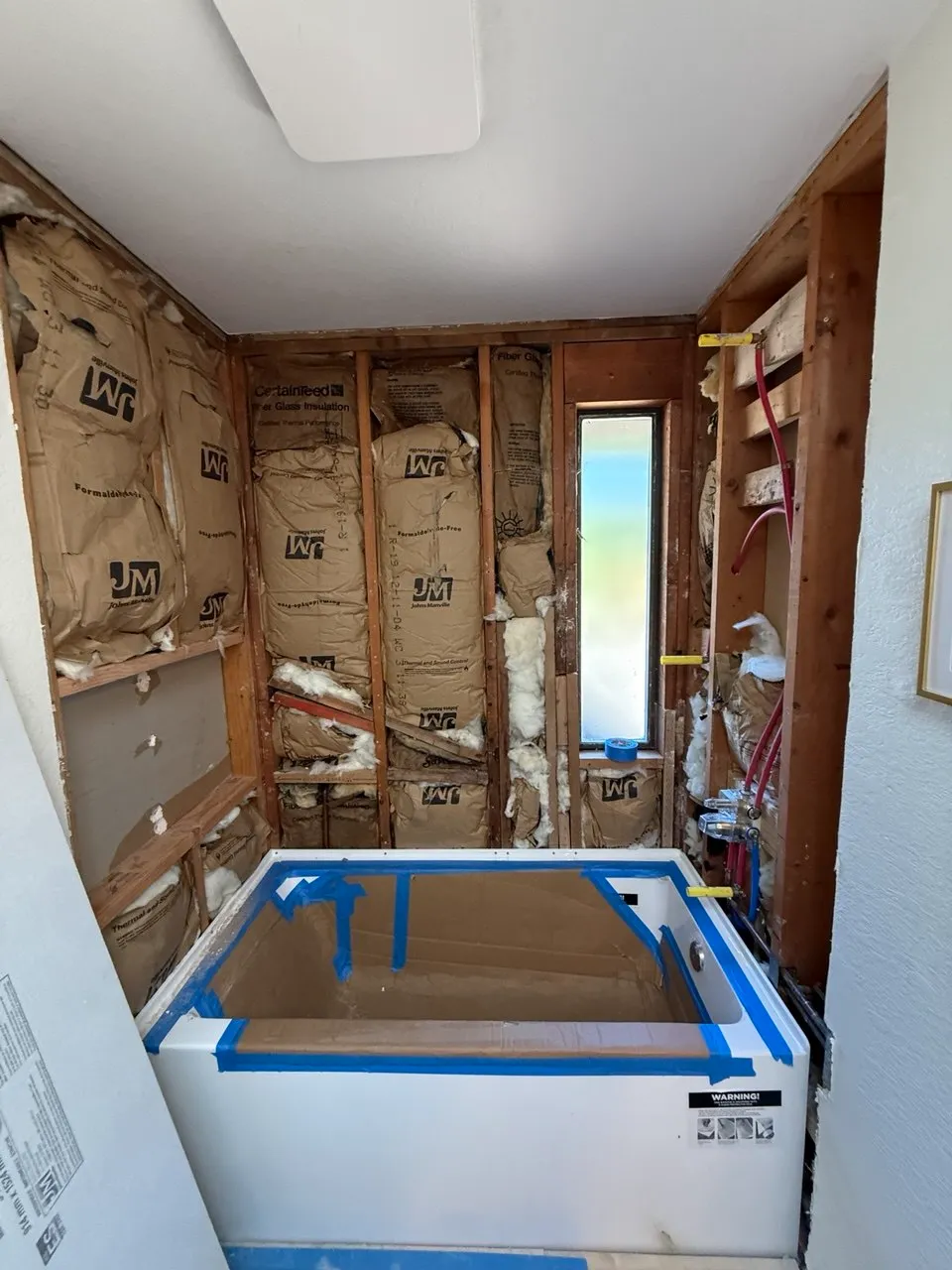
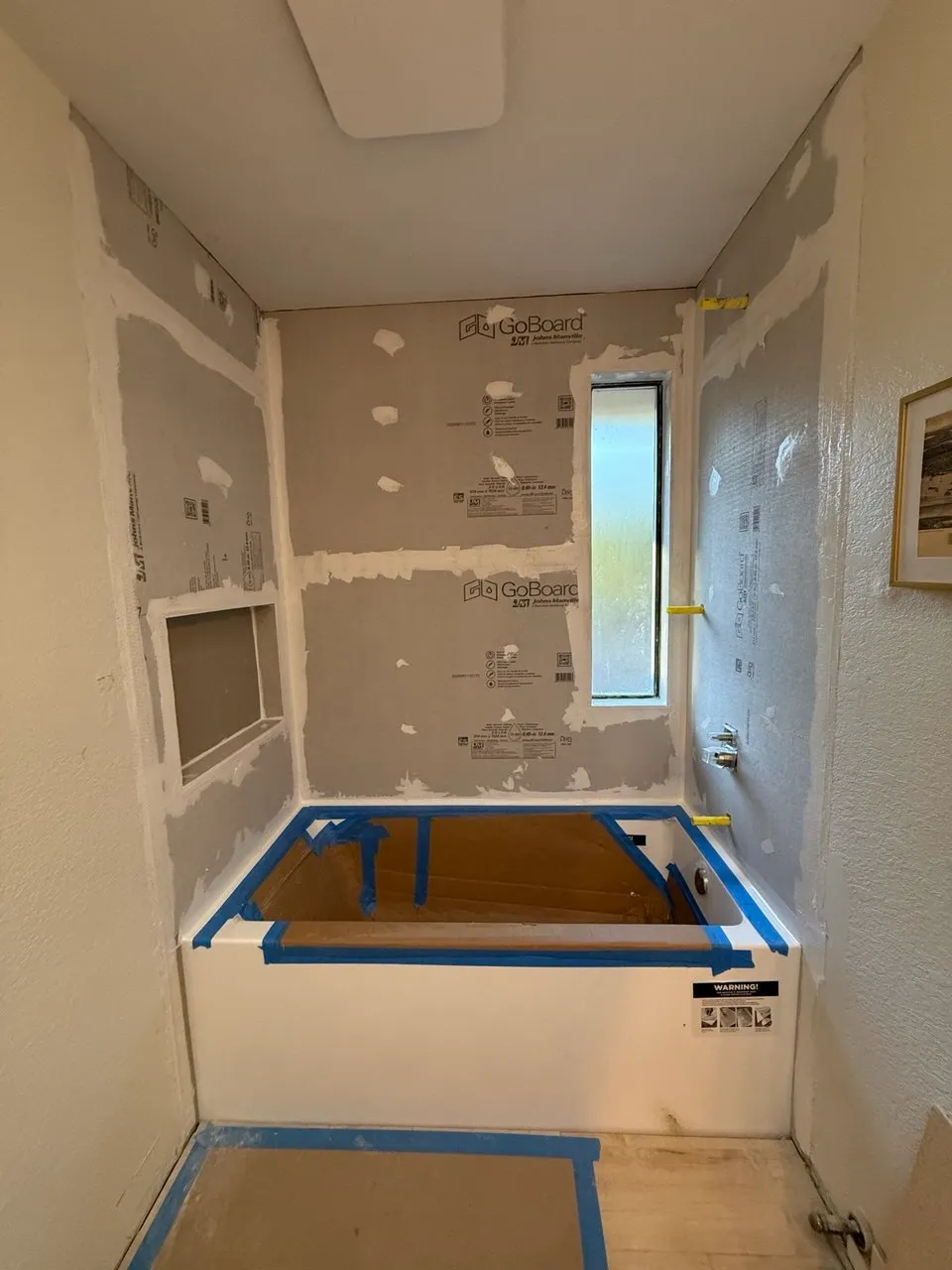
- Remove the tile and wall board down to the studs.
- Find the source of the leak and repair any rotted framing or subfloor.
- Replace the valve and supply lines if they are old or leaking.
- Build a properly sloped shower floor.
- Install a full waterproofing membrane system from brands like Schluter or Wedi, including corners, seams and the niche.
- Tile, seal and install the fixtures and glass.
Learn more about how we do it on our bathroom waterproofing page, or see a full shower rebuild on our shower remodel page.
Seeing Any of These Signs?
The sooner a leak is found, the smaller the repair. Our crew is based in south Everett and works across Snohomish County. Contact us for a free in-home visit. We will check the shower, tell you honestly whether it needs a repair or a rebuild, and give you a written quote.